Showing posts with label Human Impact on Earth. Show all posts

Tuesday, February 15, 2011

Human Impact on Earth: urbanization

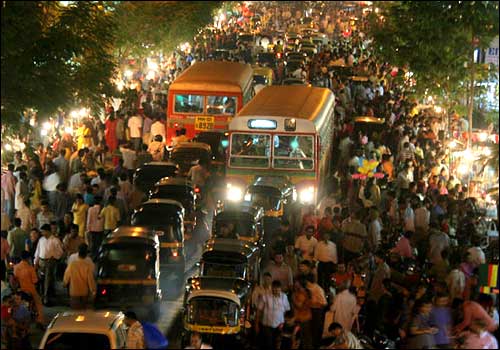
           As the world’s population expands past the six billion mark, it becomes more and more unevenly distributed. The great concentrations do not always occur on the most productive land; and people tend to gravitate towards what are often already large cities. In 1950 the largest metropolitan areas were all in the developed metropolitan areas were all in the developed world – New York, London, Tokyo and Paris. Now those have been over taken dramatically by Mexico City and Sao Paulo, with Shanghai, Calcutta, Bombay and Jakarta rising rapidly on the list.


                The developing world’s urban population is now larger than the total population of Europe, North America and Japan combined. Many of the cities have grown beyond the control of planners and include illegal slums that pack millions of people together and concentrate populations and disease. An estimated 600 million people in the cities of the developing world lack clean water, sanitation and secure homes. Even if living standards improve, cities seem set to expand, putting more land under concrete and producing more fumes from industry and vehicles in congested streets.

Tuesday, February 8, 2011

Human Impact on Earth

              Human have inhabited the Earth for only a fraction of its history, yet they have changed the face of the planet. Their impact is obvious to the eye, even from the space: city lights and gas flares by night sprawling urban areas and the unnaturally straight lines of intensive agriculture by day. With other sensors, vast tracts of pollution are obvious on land, in water and in the atmosphere.
             Mapped over just a few decades, the destruction of forests, the spread of deserts, the reduction in stratospheric ozone and the increase in green house gases are dramatic. All are the result of human activity. In the past, the Earth has displayed a remarkable resilience, globally if not locally; today , an exploding population that demands ever increasing affluence may be pushing the limits of the Earth’s resources and its ability to process waste materials.

             At almost every stage the complex natural cycles between land, sea and atmosphere can be influences, augmented or upset by human activity. Most emissions follow the hydrological cycle. They can wash into ground water and rivers, dissolve in water vapor in clouds and fall again to Earth in rain.